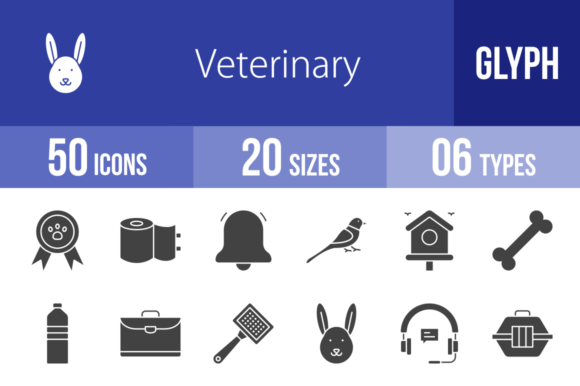
50 Veterinary Glyph Icons: A Toolkit for Animal Care Branding
Building a brand in the veterinary or pet care space requires more than just good intentions; it demands visual tools that communicate care, precision, and professionalism instantly. When you are designing a mobile app for a vet clinic or creating educational materials for pet owners, generic stock imagery often falls flat. This is where a dedicated design asset like the 50 Veterinary Glyph Icons set becomes an essential part of your creative workflow. These icons are not just simple drawings; they are a cohesive visual language designed to bridge the gap between medical authority and approachable pet care.
The core appeal of this collection lies in its versatility and vector-based foundation. As 100% vector icons, they offer infinite scalability, meaning a stethoscope icon looks just as sharp on a massive billboard as it does on a tiny smartphone screen. The set includes a comprehensive range of symbols—from the vaccine and injection to the dog house and pet food. This variety allows for a unified aesthetic across different facets of a project. Whether you are working on web design, social media graphics, or packaging design, maintaining a consistent visual hierarchy is crucial. These glyphs, designed using a grid system, ensure that every line weight and curve aligns perfectly, preventing the disjointed look that often plagues projects assembled from mismatched sources.
Practical Applications in Modern Branding
For designers and entrepreneurs, the utility of the 50 Veterinary Glyph Icons extends far beyond simple decoration. In logo design, a single glyph can serve as a strong foundation or a complementary element to a wordmark. Imagine a pet insurance company using the heart or healthcare icon as a favicon or app icon. For editorial design, such as a veterinary clinic’s quarterly newsletter, icons like the medical report or microscope can break up text-heavy sections, improving readability and guiding the reader’s eye to key points. The premium font quality of these assets ensures they integrate seamlessly into high-end layouts without looking amateurish.
Furthermore, the inclusion of six different formats—AI, CDR, EPS, JPG, PNG, and SVG—makes this set incredibly adaptable. If you are a developer building a mobile interface, the SVG format allows for lightweight, crisp rendering on any device. A crafter or hobbyist might use the PNG files for print-on-demand products like t-shirts or mugs featuring the cat, dog, or bunny icons. The design personality is clean and modern, avoiding the overly "cute" or cartoonish style that can undermine the seriousness of medical topics. Instead, these icons strike a balance, making them suitable for a call center dashboard, a clinic waiting room, or a certificate of achievement for training programs.
Enhancing User Experience and Visual Communication
Visual hierarchy is a critical component of effective design, and icons play a significant role in establishing it. By using the 50 Veterinary Glyph Icons, you can create intuitive navigation systems. For instance, a website menu for a veterinary service could use the leash for "Walking Services," the feeder for "Nutrition," and the siren for "Emergency Care." This immediate recognition reduces cognitive load for the user, making the interface more accessible. The modern typography style of these glyphs complements both serif and sans serif typefaces, allowing you to pair them with your existing font pairing strategies without clashing.
Consistency in design assets builds trust. When a customer sees the same style of iconography on a clinic's website, their mobile app, and their printed brochures, it reinforces brand identity. This set includes icons that cover the entire ecosystem of animal care. You have the doctor and nurse for staff profiles, the carrier and bird house for product listings, and the thermometer and test tube for educational content about diagnostics. Even niche items like the eyedropper or intravenous drip are included, ensuring that specialized medical concepts are communicated clearly. This level of detail demonstrates a deep understanding of the industry, which enhances the perceived professionalism of the final product.
Guidance for Selection and Implementation
Choosing the right design assets involves more than just aesthetics; it requires evaluating how they fit into your specific project goals. Before integrating the 50 Veterinary Glyph Icons, consider the context of use. For digital platforms, the clean lines and optimized shapes ensure fast load times and legibility on retina screens. For print, the vector nature allows for resizing without pixelation, which is vital for packaging design or large-format printing. It is also worth testing how these icons interact with your chosen typefaces. Because these are glyph icons rather than a script font or handwritten font, they provide a stable, structural element that can anchor more expressive typography.
When working with clients in the pet industry, I often recommend using icon sets like this to streamline the design process. Instead of commissioning custom illustrations for every small element, a high-quality commercial font or icon pack provides a cost-effective solution without sacrificing quality. For example, a marketing campaign for a new dog food brand could utilize the scale and weighing machine icons to visually communicate health benefits. Similarly, a pet adoption agency could use the bird, fish, hamster, and cat icons to categorize different animals. The practical value lies in their ability to be edited and scaled, allowing you to adjust colors or stroke weights to perfectly match your client’s color palette.
Ultimately, the strength of the 50 Veterinary Glyph Icons is their ability to function as a cohesive system. They are designed to work together, ensuring that whether you are using the pills icon next to the medicine bottle or the badge next to the certificate, the visual language remains harmonious. For anyone involved in the animal care industry—from app developers to clinic owners—investing in a robust set of design assets like these is a strategic move. It ensures that your visual communication is as professional and compassionate as the care you provide.